M1918A2 BAR
| Factions | Weapon | Icon | Classes | Ammo |
|---|---|---|---|---|
 US |
 M1918A2 BAR |
 |
 Assault Assault |
20 / 80 |
| Damage Base | Headshot × | Chest × | Stomach × | Leg × | Arm × | Bayonet | Rifle Grenades | Reload Speed | |
|---|---|---|---|---|---|---|---|---|---|
| Partial | Empty | ||||||||
| 45 | ×2.45 = 110.25 | ×1.2 = 54 | ×1.15 = 51.75 | ×0.8 = 36 | ×0.7 = 31.5 | NO | NO | 2.5 Seconds | 3.4 Seconds |
| Designation | Weapon Type | Fire Modes | Fire Rate | Bullet Spread ° | Range Modifier | Muzzle Velocity | Projectile weight | Weight |
|---|---|---|---|---|---|---|---|---|
| M1918A2 BAR | Battle Rifle | FAST+SLOW | FAST 600 RPM SLOW 350 RPM |
8.87° & 2.15° ADS | 0.920" | 860 m/s | 10 g (154.3 gr) | 7.25 kg (15.98 lbs) |
| Full name | Caliber | Place of Origin | Date | Manufacturer | Barrel Length | Total Length | Weapon Script Name |
|---|---|---|---|---|---|---|---|
| Rifle, Caliber .30, Automatic, Browning, M1918A2 | 7.62x63mm | USA | 1938 | Colt Winchester Many Others |
24.0 in (610 mm) | 47.8 in (1,215 mm) | weapon_m1918 |
M1918A2 BAR is an American automatic rifle/light machine gun chambered for the .30-06 Springfield cartridge. It is a gas-operated, magazine-fed weapon intended to provide portable automatic fire at the squad level. This late-service variant is best known for its World War II and Korean War use, and for a smaller amount of continued service in early Vietnam-era allied forces and specialist roles.
HISTORY
John M. Browning’s BAR was developed in 1917 and adopted late in World War I, but the BAR’s squad automatic role was refined in the interwar period and formalized with the M1918A2 configuration authorized in 1938. The M1918A2 incorporated changes aimed at sustained automatic fire, including a bipod, revised furniture, and a rate-reducing mechanism that provided two cyclic-rate settings for automatic fire, reflecting its evolution from an “automatic rifle” concept toward a squad light machine gun role. The M1918A2 became the primary U.S. service BAR variant through World War II and Korea.
Although replaced in U.S. front-line service by newer machine guns and rifles after the 1950s, the M1918A2 remained in inventories and was also supplied abroad through military assistance programs. In the early Vietnam War period, BARs could still appear among second-line and allied weapons—particularly in forces equipped with older U.S. small arms—where they continued to serve as a magazine-fed source of automatic fire until more modern systems became widespread.
Sources
- U.S. Small Arms of World War II (includes Browning Automatic Rifle, caliber .30, M1918A2) | Springfield Armory National Historic Site (NPS)
- Browning Model 1918 A2 Automatic Rifle, Cal. 30 | Smithsonian National Museum of American History
- TM 9-1005-208-12: Rifle, Caliber .30, Automatic, Browning, M1918A2 (Operator/Organizational Maintenance Manual) | Department of the Army
- John Browning’s Automatic Rifle (BAR history and M1918A2 context) | American Rifleman
-
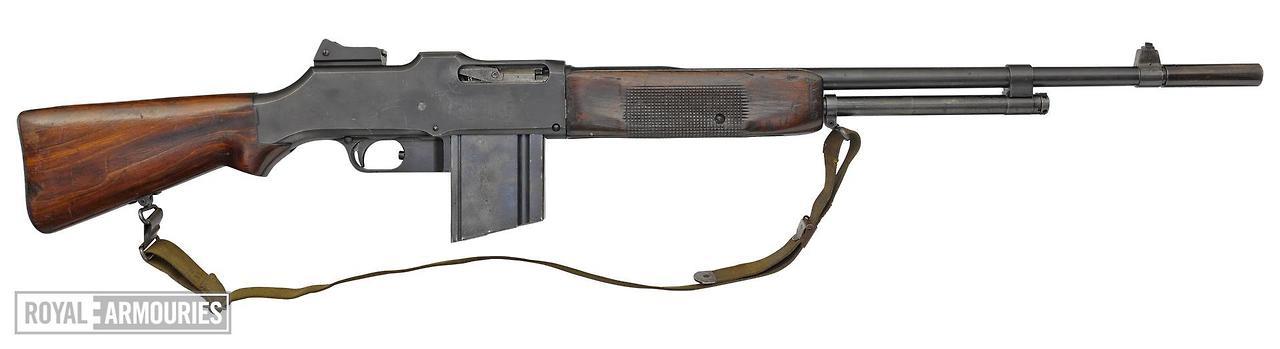 M1918A2 BAR.
 -
 M1918A2 BAR.
 -
 BAR in service.
 -
 BAR in service.
 -
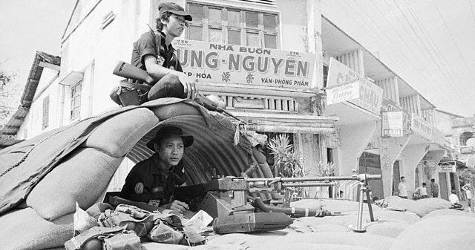 BAR in Vietnam-era use.
 -
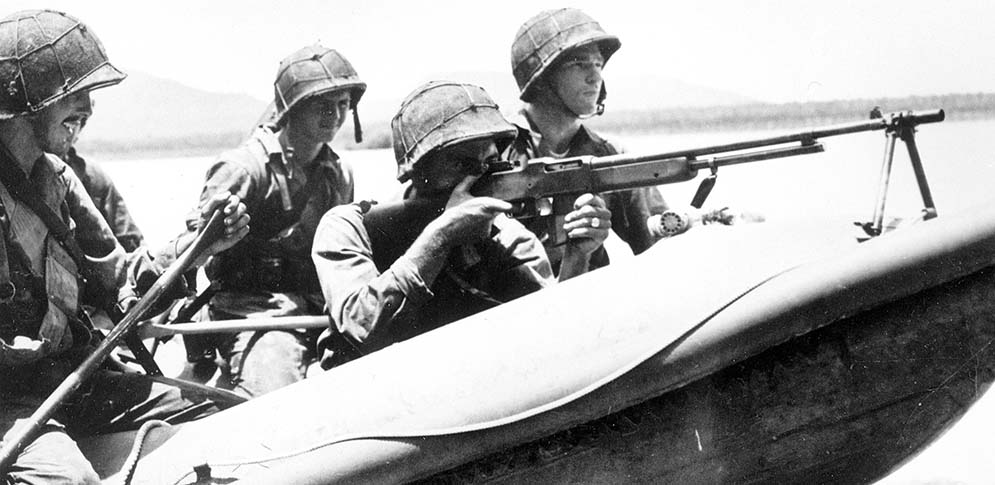 M1918A2 BAR.
 -
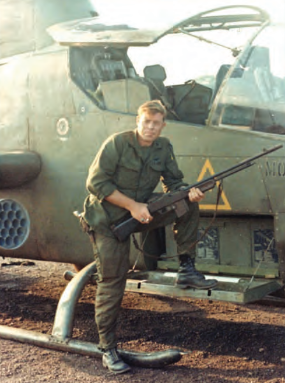 M1918A2 BAR.
 -
 BAR in Vietnam-era use.


