Dual HDM
| Factions | Weapon | Icon | Classes | Ammo |
|---|---|---|---|---|
 US |
 Dual HDM |
 |
Gun Game Zombies |
20+2 / 60 |
| Damage Base | Headshot × | Chest × | Stomach × | Leg × | Arm × | Reload Speed | |
|---|---|---|---|---|---|---|---|
| Partial | Empty | ||||||
| 30 | ×2.6 = 78 | ×1.7 = 51 | ×1.6 = 48 | ×1.1 = 33 | ×1.05 = 31.5 | 3.966 Seconds | 5.4 Seconds |
| Designation | Weapon Type | Fire Modes | Fire Rate | Bullet Spread ° | Range Modifier | Muzzle Velocity | Projectile weight | Weight |
|---|---|---|---|---|---|---|---|---|
| HDM | Suppressed Dual Pistols |
Semi | 50 RPM | 8.5° & 4.75° ADS | 0.72 | 329 m/s | 2.7 g (41.6 gr) | 2.6 kg (5.73 lbs) |
| Full name | Caliber | Place of Origin | Date | Manufacturer | Barrel Length | Total Length | Weapon Script Name |
|---|---|---|---|---|---|---|---|
| High Standard HDM | .22LR | USA | 1942 | High Standard Manufacturing Company | 6.75 in (171 mm) | 13.815 inches (351 mm) | weapon_dual_hdm |
The High Standard HDM is an American integrally suppressed semi-automatic pistol chambered in .22 LR. Based on High Standard’s H-D series target pistol, it was configured for clandestine use where minimal report and flash were critical. The HDM is best known for its long, fixed suppressor tube and its association with U.S. intelligence and special operations from World War II through the Vietnam era.
HISTORY
The integrally suppressed High Standard was developed during World War II for the Office of Strategic Services (OSS) as a purpose-built “silent” pistol for close-range clandestine work. The suppressor design is commonly credited to engineers working through Bell Telephone Laboratories/Western Electric programs and was incorporated into High Standard pistols produced under wartime contract, creating the USA Model H-D MS/HDM pattern. Its simple blowback action and .22 LR chambering made it well suited to suppression, trading raw power for discretion and controllable, accurate placement at short distances.
After World War II, suppressed High Standard pistols continued to appear in intelligence and special operations inventories, and they are frequently discussed in connection with covert and reconnaissance missions. During the Vietnam War, MACV-SOG and other special operations elements are documented as favoring suppressed .22 pistols for quiet, close-range tasks—particularly in prisoner snatch and reconnaissance contexts where limiting noise could be the difference between disengaging cleanly or triggering a larger firefight. By the late Cold War, these pistols were increasingly supplemented by newer suppressed sidearms, but the HDM remained an iconic example of early integrally suppressed handgun design.
Sources
- Royal Armouries — Rimfire self-loading silenced military pistol (Hi-Standard Model HD-MS), 1944 (OSS issue)
- Small Arms Review — “The High Standard USA HD MS”
- American Rifleman — “Behind Enemy Lines: Guns of Vietnam’s SOG Warriors”
- Task & Purpose — “The History Of The CIA's Silent Pistol Of Choice”
-
 High Standard HDM (integrally suppressed .22 LR pistol).
 -
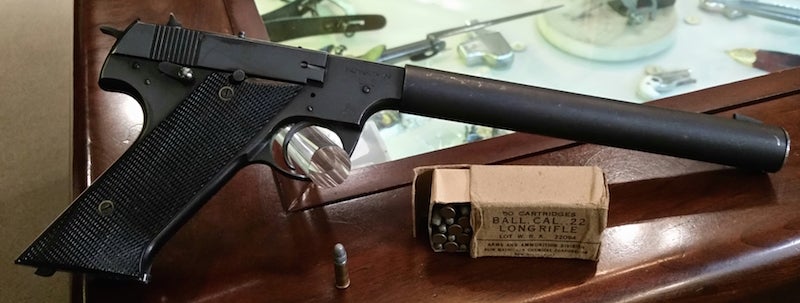 HDM on display.
 -
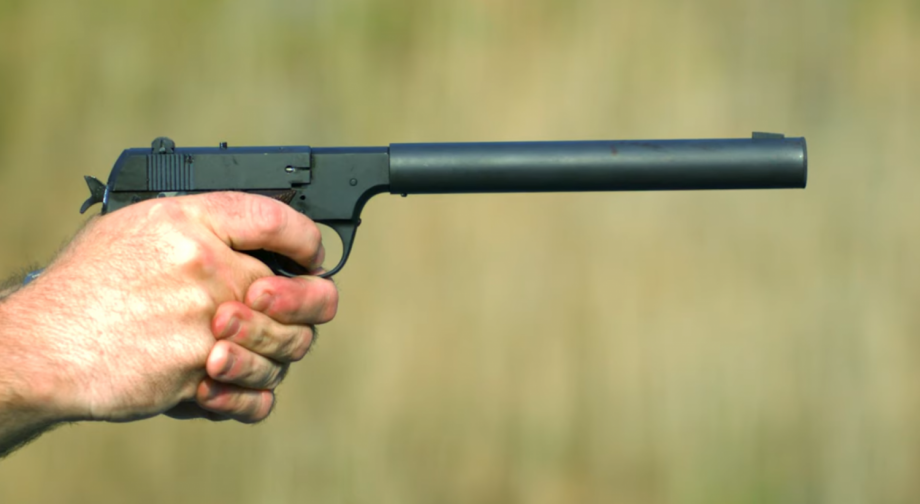 Close-up of the HDM in use.
 -
 HDM profile view.
 -
 HDM and suppressor assembly detail.
 -
 HDM display photo.
 -
 HDM shown in a historical presentation.
 -
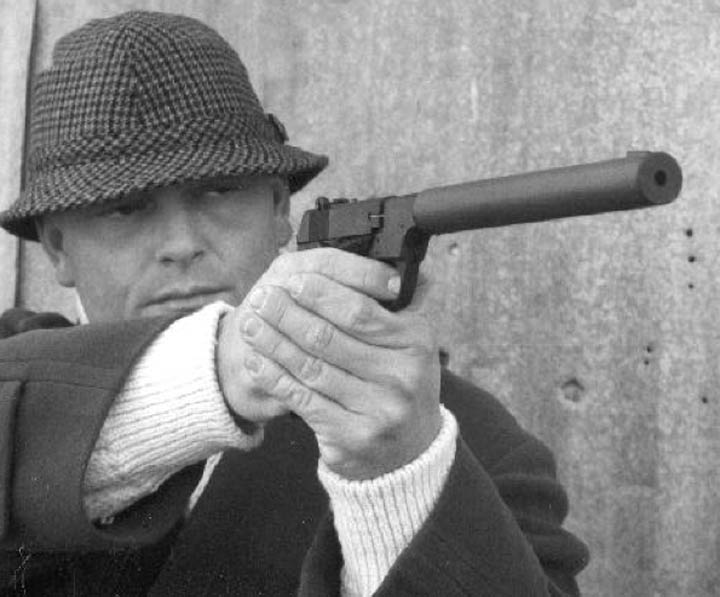 HDM, close-up.
 -
 High Standard suppressed pistol family photo.
 -
 Schematic/diagram of the High Standard H-D/HDM pattern.
 -
 Suppressed weapons associated with the Vietnam War era, including the High Standard pattern.


.JPG)


