Mauser C96
| Factions | Weapon | Icon | Classes | Ammo |
|---|---|---|---|---|
 VC |
 Mauser C96 |
 |
Everyone Except Sniper |
10 / 30 |
| Damage Base | Headshot × | Chest × | Stomach × | Leg × | Arm × | Reload Speed | |
|---|---|---|---|---|---|---|---|
| Partial | Empty | ||||||
| 30 | ×2.6 = 78 | ×1.7 = 51 | ×1.6 = 48 | ×1.1 = 33 | ×1.05 = 31.5 | 3.233 Seconds | 3.1 Seconds |
| Designation | Weapon Type | Fire Modes | Fire Rate | Bullet Spread ° | Range Modifier | Muzzle Velocity | Projectile weight | Weight |
|---|---|---|---|---|---|---|---|---|
| Mauser C96 | Pistol | Semi | 50 RPM | 6.5° & 2.75° ADS | 0.72 | 329 m/s | 5.6 g (86.4 gr) | 1.13 kg (2.49 lbs) |
| Full name | Caliber | Place of Origin | Date | Manufacturer | Barrel Length | Total Length | Weapon Script Name |
|---|---|---|---|---|---|---|---|
| Mauser Construktion 96 | 7.63×25mm Mauser | Germany | 1896 | Mauser Taiyuan Arsenal, Taku Naval Arsenal and Hanyang Arsenal (China) |
5.5 in (140 mm) | 12.3 in (312 mm) | weapon_c96 |
The Mauser C96 is a German semi-automatic pistol most commonly chambered in 7.63×25mm Mauser, with some variants produced in other calibers including 9×19mm Parabellum. It uses an integral box magazine in front of the trigger, typically loaded from the top using stripper clips. The C96 is best known for its distinctive “broomhandle” grip and its wooden shoulder stock that doubles as a holster, giving it carbine-like handling at longer pistol ranges.
HISTORY
Mauser introduced the C96 in 1896 as one of the earliest successful semi-automatic pistols, and it remained in production—across multiple patterns and contracts—into the late 1930s. Its high-velocity 7.63mm cartridge, robust construction, and stock/holster option made it attractive to a wide range of buyers, from military officers to police and private purchasers. The pistol was exported widely and inspired numerous copies and close derivatives, notably in Spain and China, where both licensed and unlicensed production helped spread the design far beyond Germany.
In Southeast Asia, the C96 is best understood as a legacy sidearm that could appear through long-term circulation rather than standardized issue during the Vietnam War. Large numbers of C96 pistols and Chinese-produced copies existed in the region due to earlier decades of Chinese military use and arms movement, and older pistols of many types remained in private hands and secondary service. As a result, C96-type pistols could be encountered in Vietnam in limited numbers alongside more common Cold War-era small arms.
Sources
- Ian V. Hogg, Pistols of the World (Krause Publications).
- Edward Clinton Ezell, Small Arms of the World (Stackpole Books).
- Robert W. D. Ball, Mauser Military Rifles and Pistols (collector/reference work).
- Jane’s Infantry Weapons (period reference volumes covering service pistols and variants).
-
 Mauser C96 pistol.
 -
 Mauser C96, profile view.
 -
 Mauser C96 with wooden stock/holster.
 -
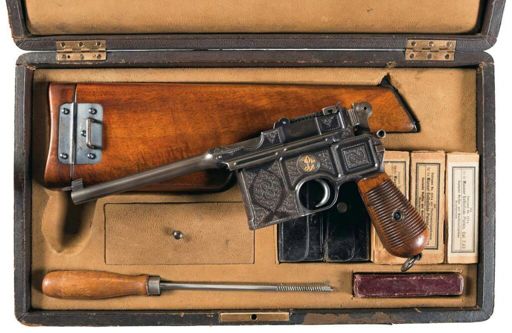 Mauser C96, close-up detail.
 -
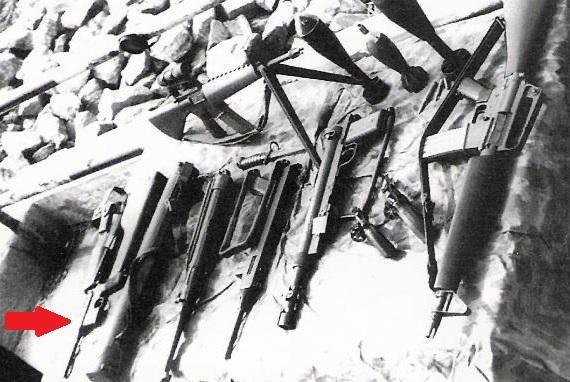 C96 in Vietnam.
 -
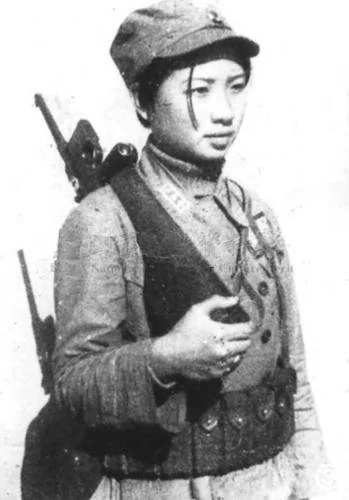 Female Chinese soldier with Mauser C96 “Broomhandle”, c. 1939.
 -
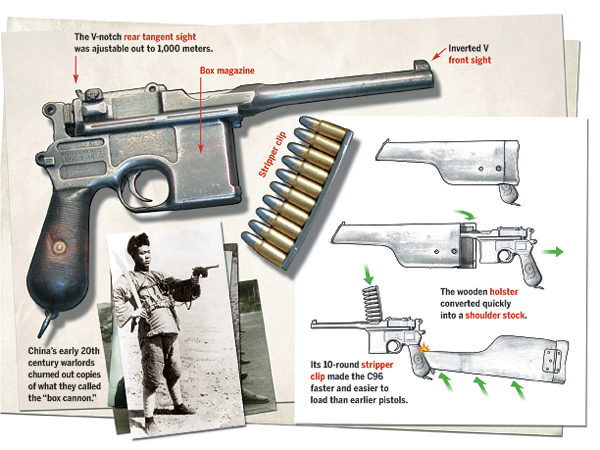 Mauser C96 shown with stock/holster.


