Ruby
| Factions | Weapon | Icon | Classes | Ammo |
|---|---|---|---|---|
 VC |
 Ruby |
 |
Everyone Except Sniper |
9+1 / 27 |
| Damage Base | Headshot × | Chest × | Stomach × | Leg × | Arm × | Bayonet | Rifle Grenades | Reload Speed | |
|---|---|---|---|---|---|---|---|---|---|
| Partial | Empty | ||||||||
| 27 | ×2.4 = 64.8 | ×1.6 = 43.2 | ×1.5 = 40.5 | ×1.15 = 31.05 | ×1.15 = 31.05 | NO | NO | Seconds | Seconds |
| Designation | Weapon Type | Fire Modes | Fire Rate | Bullet Spread ° | Range Modifier | Muzzle Velocity | Projectile weight | Weight |
|---|---|---|---|---|---|---|---|---|
| [[]] | Pistol | Semi | 50 RPM | 6.35° & 2.35° ADS | 0.72 | 315 m/s | 6.1 g (94.14 gr) | 0.85 kg (1.87 lbs) |
| Full name | Caliber | Place of Origin | Date | Manufacturer | Barrel Length | Total Length | Weapon Script Name |
|---|---|---|---|---|---|---|---|
| FN | .45ACP | Kingdom of Spain | 1914 | ARM | in ( mm) | in ( mm) | weapon_ruby |
The Makarov pistol (PM) is a Soviet semi-automatic pistol chambered in 9×18mm Makarov. It is a compact, blowback-operated sidearm designed for military and police service, using an 8-round detachable magazine. The PM is best known for its simplicity, reliability, and widespread Cold War distribution through Soviet and allied production.
HISTORY
After World War II, the Soviet Union sought a modern replacement for the TT-33 and the Nagant M1895 revolver, favoring a compact service pistol that could be produced economically and maintained easily. Nikolay Makarov’s design—strongly influenced by the Walther PP-style layout—combined a straightforward blowback action with a new 9×18mm cartridge intended to balance controllable recoil and practical service performance. The pistol won Soviet trials and was adopted in 1951, entering large-scale manufacture at Izhevsk and becoming a standard sidearm for Soviet forces and internal security services.
Through the Cold War, the PM was produced in very large numbers and also manufactured under license or as close copies in several countries, which helped it spread widely beyond the USSR. In Southeast Asia, Makarov pistols appeared via Soviet-bloc supply networks and could be encountered as sidearms carried by officers, security personnel, and specialized troops during the Vietnam War era. Although later designs were introduced to replace it in some services, the PM’s durability and the sheer scale of production kept it in use for decades afterward.
Sources
- Imperial War Museums — Pistolet Makarova (PM) (collection entry)
- Smithsonian (National Museum of American History) — Makarov semiautomatic pistol (collection entry)
- Kalashnikov Concern — Makarov PM pistol (overview)
- American Rifleman — “The Makarov: Hotspot Staple”
-
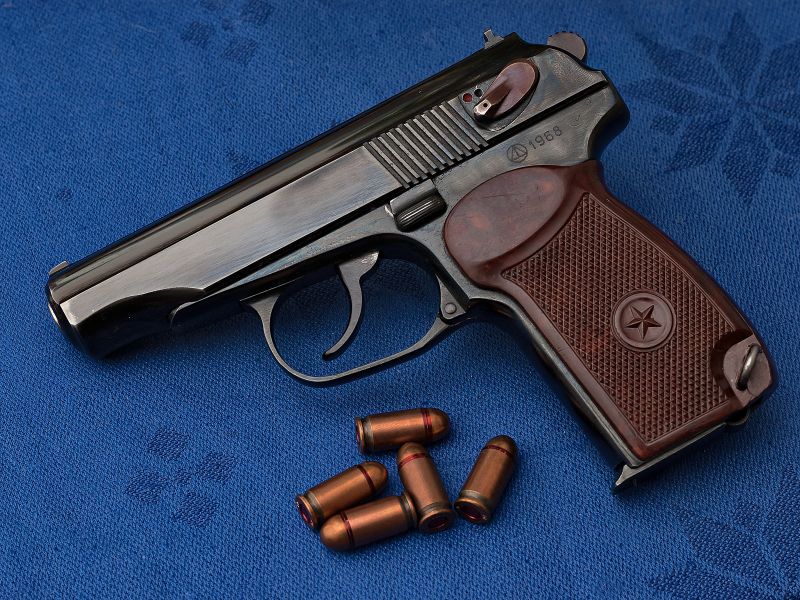 Makarov PM pistol.
 -
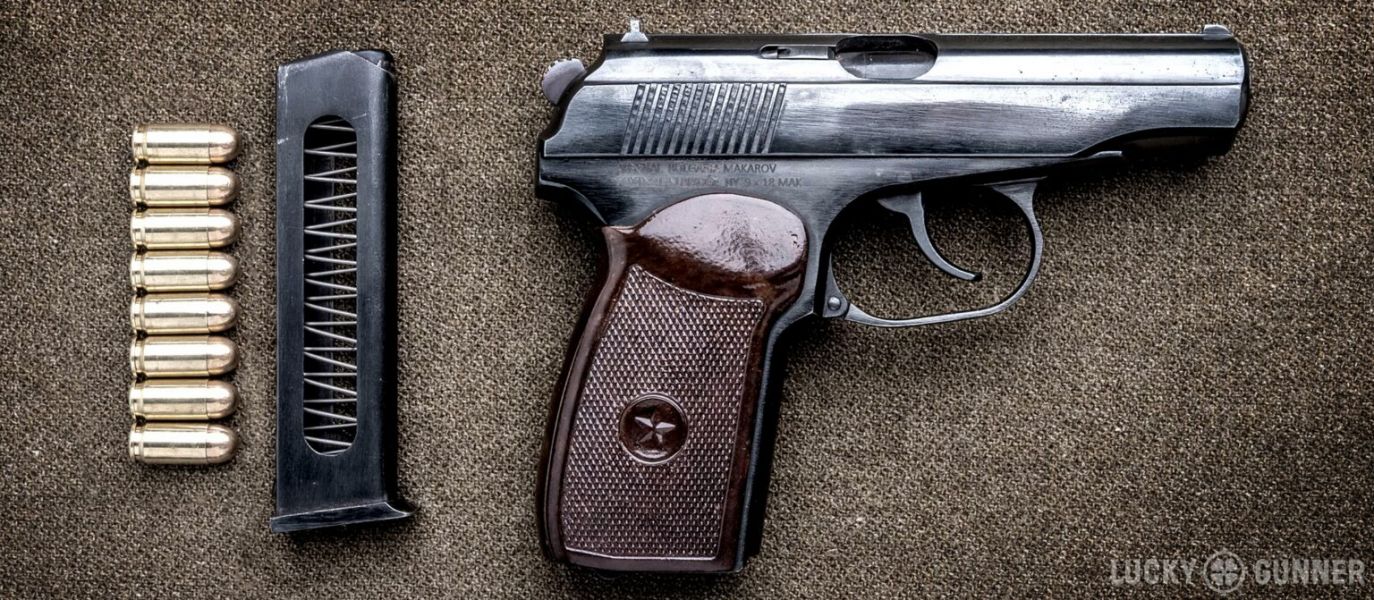 Makarov PM with 9×18mm ammunition.
 -
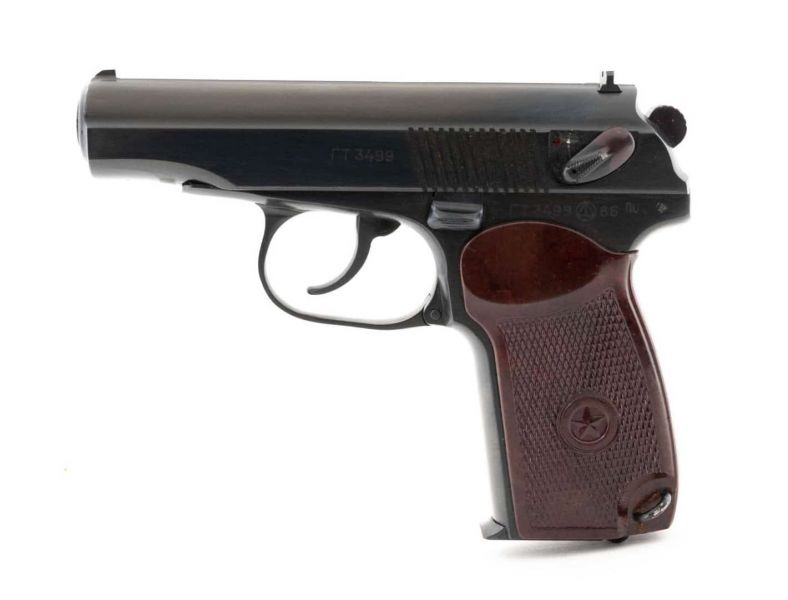 Soviet-made Makarov PM.
 -
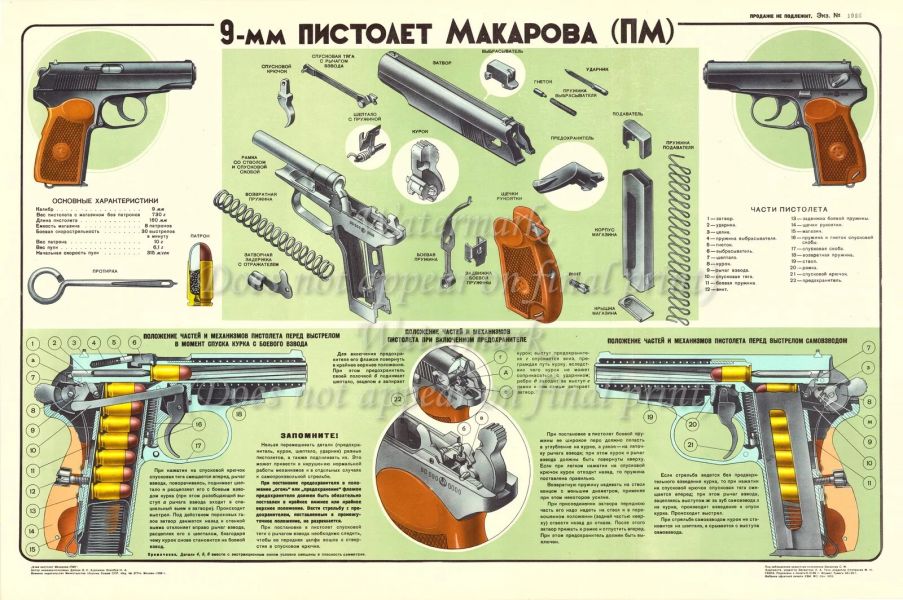 Makarov PM poster/reference image.
.jpeg)


