M2 Carbine SOG: Difference between revisions
Skizmophonic (talk | contribs) No edit summary |
Skizmophonic (talk | contribs) Update weapon stats from scripts; hide Fire Rate on semi-auto-only weapons |
||
| (7 intermediate revisions by the same user not shown) | |||
| Line 1: | Line 1: | ||
[[Category:Weapons]] | |||
[[Category:Weapons of Vietnam]] | |||
{| class="wikitable sortable" style="margin:auto;text-align: center;width:90%" | {| class="wikitable sortable" style="margin:auto;text-align: center;width:90%" | ||
|- | |- | ||
| Line 7: | Line 9: | ||
! rowspan=2 | [[Ammo]] | ! rowspan=2 | [[Ammo]] | ||
|- | |- | ||
|[[File:Flag_us_new.png|50px]]<br><strong>[[US]]</strong>|| [[File:M2c_sog.png|512px]]<br><b> [[M2 Carbine SOG]]</b> || [[File:Weapon_m2c_sog.svg|512px]] || [[File:Class_medic.png|50px]] <b>[[Medic]]</b><br> [[File:Class_radioman.png|50px]] <b>[[Radioman]]</b><br> || 30 / 90 | |[[File:Flag_us_new.png|50px]]<br><strong>[[US]]</strong>||[[File:M2c_sog.png|512px]]<br><b> [[M2 Carbine SOG]]</b>||[[File:Weapon_m2c_sog.svg|512px]]||[[File:Class_medic.png|50px]] <b>[[Medic]]</b><br> [[File:Class_radioman.png|50px]] <b>[[Radioman]]</b><br>||30[[+1]] / 90 | ||
|- | |- | ||
|} | |} | ||
| Line 20: | Line 22: | ||
! rowspan=2 | [[Bayonet]] | ! rowspan=2 | [[Bayonet]] | ||
! rowspan=2 | [[Rifle Grenades]] | ! rowspan=2 | [[Rifle Grenades]] | ||
! colspan=2 | Reload Speed | |||
|- | |- | ||
|36|| | ! Partial!! Empty | ||
|- | |||
|36||x2.4 = 86.4||x1.2 = 43.2||x1.15 = 41.4||x0.8 = 28.8||x0.7 = 25.2||NO||NO||2.533 Seconds||3.233 Seconds | |||
|- | |- | ||
|} | |} | ||
| Line 36: | Line 41: | ||
! rolspan=2 | [[Weight]] | ! rolspan=2 | [[Weight]] | ||
|- | |- | ||
|[[M2 Carbine SOG]]||[[Carbine]]||Semi+Auto||700 RPM||7. | |[[M2 Carbine SOG]]||[[Carbine]]||Semi+Auto||700 RPM||7.3 / 2.05 [[ADS]]||0.960||607 m/s||7.1 g (109.57 gr)||2 kg (4.41 lbs) | ||
|- | |- | ||
|} | |} | ||
| Line 55: | Line 60: | ||
<hr> | |||
'''M2 Carbine''' is the U.S. selective-fire variant of the [[M1 Carbine]], chambered for the .30 Carbine cartridge. It can fire in both semi-automatic and fully automatic modes and uses detachable box magazines, commonly 15- or 30-round types. It is best known for giving the lightweight carbine family a higher volume of fire, and for extensive distribution to South Vietnamese forces during the Vietnam War era. | |||
==HISTORY== | |||
The M2 Carbine was introduced late in World War II as an update to the M1 Carbine that added a selective-fire mechanism to increase close-range firepower while retaining the carbine’s compact, lightweight format. Large postwar stocks and continued production made the carbine family a common U.S. small arm through the early Cold War, and the M2’s automatic capability broadened its utility for security, convoy, and special-purpose roles where a full-size rifle was less desirable. | |||
In Vietnam, M1 and M2 carbines were issued early to American advisors and later to a wide range of U.S. and allied forces, especially the [[South Vietnamese]], where the carbine’s light weight and controllability were valued. As the conflict progressed, carbines were increasingly replaced in front-line U.S. roles by newer rifles such as the [[M16]], but they remained widely used by ARVN and other allied units, and large numbers were captured and redistributed by the [[Việt Cộng]]. By the later years of the war, the .30 Carbine cartridge’s limited range, barrier penetration, and terminal effect compared with full-power rifles and newer assault rifles contributed to the M2 being seen as outclassed in many combat situations. | |||
===Sources=== | |||
* [https://americanhistory.si.edu/collections/object/nmah_417590 U.S. Carbine, Caliber .30, M2 | Smithsonian National Museum of American History] | |||
* [https://www.nps.gov/spar/learn/historyculture/m1-carbine.htm The M1 Carbine (family history including M2) | Springfield Armory National Historic Site (NPS)] | |||
* [https://www.army.mil/article/262209/the_m1_carbine_a_short_history The M1 Carbine: A Short History (carbine family context) | U.S. Army] | |||
* [https://vietnamwar.govt.nz/photo/m1-carbine M1 Carbine (Vietnam-era use and distribution context) | VietnamWar.govt.nz (Ministry for Culture and Heritage, New Zealand)] | |||
<hr> | <hr> | ||
<div class="mw-collapsible" style="border:1px solid #ccc; padding:5px; width:100%;"> | |||
<div style="text-align:center; font-weight:bold;">Real-Life Photos</div> | |||
<div class="mw-collapsible-content" style="margin-top:0.5em;"> | |||
<gallery mode="packed" heights="400px"> | |||
File:M2carb.jpg|M2 with flash hider | |||
File:M2-Carbine.jpg|M2 Carbine. | |||
File:M2Detail.png|M2 Carbine receiver and selector details. | |||
File:Sgt Smith with an M2 Carbine.jpg|Sgt Smith with an M2 Carbine | |||
</gallery> | |||
</div> | |||
</div> | |||
<hr> | |||
{{# | <div class="mw-collapsible" style="border:1px solid #ccc; padding:5px; width:100%;"> | ||
<div style="text-align:center; font-weight:bold;">Videos</div> | |||
| | <div class="mw-collapsible-content" style="margin-top:0.5em;"> | ||
{{#ev:youtube|ateT144BgPk}} | |||
{{#ev:youtube|NvCUI_eGdJQ}} | |||
{{#ev:youtube|1NpC9hQK1a8}} | |||
{{#ev:youtube|o-J-uNcwnXo}} | |||
</div> | |||
</div> | |||
Latest revision as of 23:43, 14 June 2026
| Factions | Weapon | Icon | Classes | Ammo |
|---|---|---|---|---|
 US |
 M2 Carbine SOG |
 |
 Medic Medic Radioman Radioman |
30+1 / 90 |
| Damage Base | Headshot × | Chest × | Stomach × | Leg × | Arm × | Bayonet | Rifle Grenades | Reload Speed | |
|---|---|---|---|---|---|---|---|---|---|
| Partial | Empty | ||||||||
| 36 | x2.4 = 86.4 | x1.2 = 43.2 | x1.15 = 41.4 | x0.8 = 28.8 | x0.7 = 25.2 | NO | NO | 2.533 Seconds | 3.233 Seconds |
| Designation | Weapon Type | Fire Modes | Fire Rate | Bullet Spread ° | Range Modifier | Muzzle Velocity | Projectile weight | Weight |
|---|---|---|---|---|---|---|---|---|
| M2 Carbine SOG | Carbine | Semi+Auto | 700 RPM | 7.3 / 2.05 ADS | 0.960 | 607 m/s | 7.1 g (109.57 gr) | 2 kg (4.41 lbs) |
| Full name | Caliber | Place of Origin | Date | Manufacturer | Barrel Length | Total Length | Weapon Script Name |
|---|---|---|---|---|---|---|---|
| Carbine, Caliber .30, M2 | 7.62x33mm | USA | 1944 | Many | 17.75 in (451 mm) | 35.6 in (900 mm) | weapon_m2c_sog |
M2 Carbine is the U.S. selective-fire variant of the M1 Carbine, chambered for the .30 Carbine cartridge. It can fire in both semi-automatic and fully automatic modes and uses detachable box magazines, commonly 15- or 30-round types. It is best known for giving the lightweight carbine family a higher volume of fire, and for extensive distribution to South Vietnamese forces during the Vietnam War era.
HISTORY
The M2 Carbine was introduced late in World War II as an update to the M1 Carbine that added a selective-fire mechanism to increase close-range firepower while retaining the carbine’s compact, lightweight format. Large postwar stocks and continued production made the carbine family a common U.S. small arm through the early Cold War, and the M2’s automatic capability broadened its utility for security, convoy, and special-purpose roles where a full-size rifle was less desirable.
In Vietnam, M1 and M2 carbines were issued early to American advisors and later to a wide range of U.S. and allied forces, especially the South Vietnamese, where the carbine’s light weight and controllability were valued. As the conflict progressed, carbines were increasingly replaced in front-line U.S. roles by newer rifles such as the M16, but they remained widely used by ARVN and other allied units, and large numbers were captured and redistributed by the Việt Cộng. By the later years of the war, the .30 Carbine cartridge’s limited range, barrier penetration, and terminal effect compared with full-power rifles and newer assault rifles contributed to the M2 being seen as outclassed in many combat situations.
Sources
- U.S. Carbine, Caliber .30, M2 | Smithsonian National Museum of American History
- The M1 Carbine (family history including M2) | Springfield Armory National Historic Site (NPS)
- The M1 Carbine: A Short History (carbine family context) | U.S. Army
- M1 Carbine (Vietnam-era use and distribution context) | VietnamWar.govt.nz (Ministry for Culture and Heritage, New Zealand)
-
 M2 with flash hider
 -
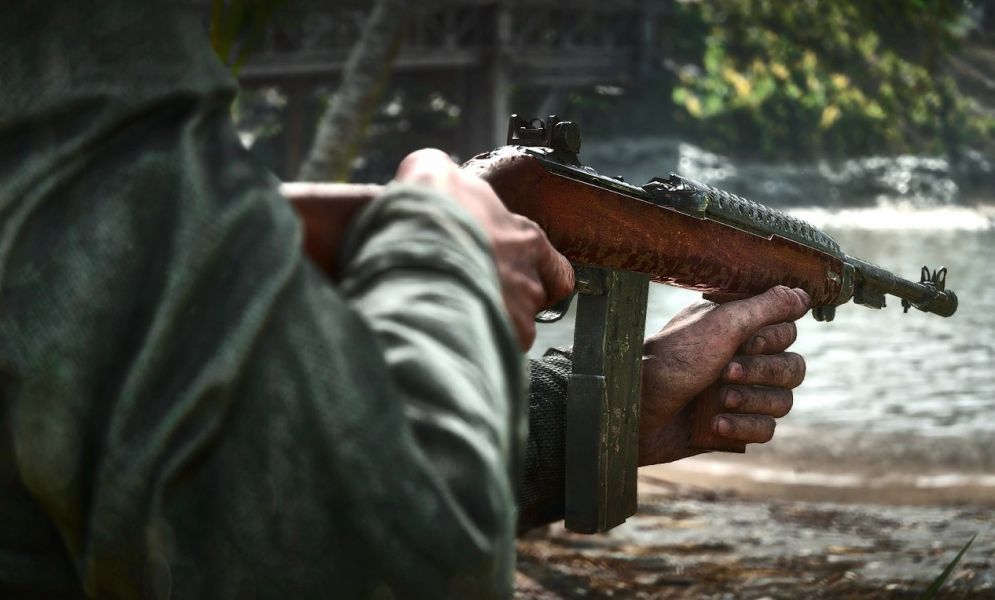 M2 Carbine.
 -
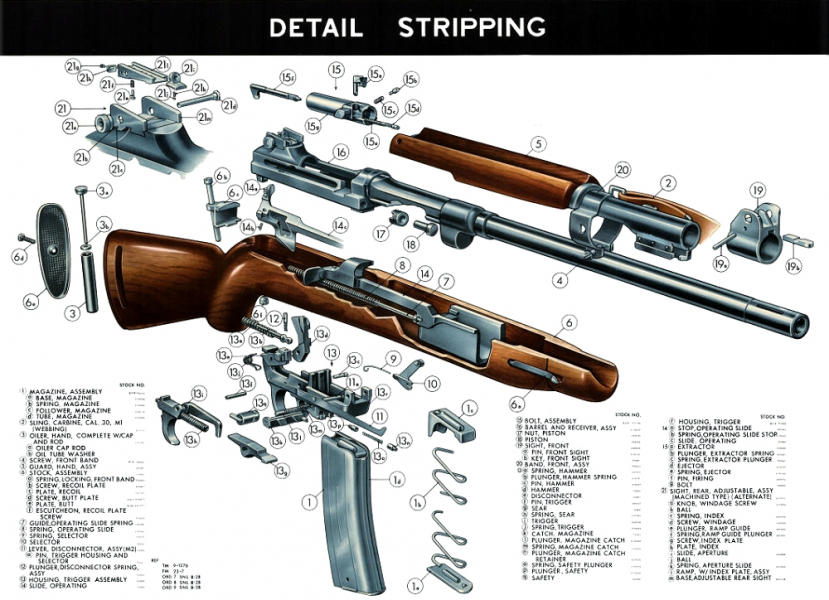 M2 Carbine receiver and selector details.
 -
 Sgt Smith with an M2 Carbine


